
This summer, the Policy and Advocacy team at Joyful Heart welcomed two undergraduate interns to our New York office. Emma and Julia gained hands-on experience in our ongoing campaign to eliminate the untested rape kit backlog and conducted independent research projects to inform our future policy work. Here, Emma and Julia share their reflections and findings from the summer.
Emma Malenka
I learned a tremendous amount this summer, not only about how much legislation costs or how we can improve access to high quality forensic medical examinations, but also about how to think and speak in a policy-oriented manner. I learned to write in a way that walks the reader through the issue, and learned how to think and articulate myself more clearly.
Emma Malenka

Emma’s research studied access to high-quality medical forensic exams in hospitals across the United States, with a focus on rural communities. Survivors who receive exams conducted by trained Sexual Assault Nurse Examiners (SANEs) receive trauma-informed care and experience better mental health outcomes. Research shows that survivors who receive exams conducted by trained SANEs experience lower rates of anxiety and that SANE-collected forensic evidence yields higher prosecution rates. Despite these benefits, there is a national shortage of SANEs, particularly in rural areas. Experts are piloting innovative models of care to serve survivors in these regions, including telemedicine and training community leaders in remote areas to collect evidence.
By the end of the summer, when it came time to present my research to the staff, I felt confident in my ability to translate findings from the countless academic papers I had read into a logical and informative presentation.
Emma Malenka
Julia Packman
Our first day of orientation was overwhelming, but hearing everyone speak so passionately about the work of the foundation was infectious. This summer, I conducted research on increasing efficiency in public crime labs and innovations in DNA technologies. My background is in science, so I have conducted many research projects in the past, but none from a policy angle. This was a daunting task, because so much of what I was learning was extremely technical.
Julia Packman
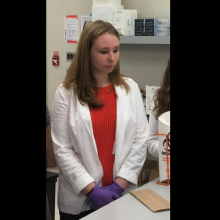
Julia studied strategies for increasing efficiency and accuracy of DNA analysis at public crime labs. Following a series of controversies regarding evidence tampering, contamination, and delays in analysis, public trust in crime labs has suffered. As demand for DNA analysis grows, labs face significant resource and staffing constraints. By implementing new work processes to increase efficiency and using cutting-edge DNA analysis techniques, crime labs can better handle increased demand and improve the quality of analysis they provide.
Because my research was so focused on crime labs, I was in awe when we visited the New York City lab and learned how a rape kit is processed there. I had seen much of this on paper, but seeing it in person, an experience not many people get to have, really put my work into perspective.
Julia Packman
Joyful Heart is grateful to Emma and Julia for conducting such in-depth, high-quality research, which will inform our policy and advocacy work in the coming year. We are honored to mentor and help grow the next generation of leaders in the movement to end this violence forever.
-By Ilse Knecht, Director of Policy & Advocacy, August 29, 2017