
What Is a Rape Kit and Forensic Medical Examination?
Every 68 seconds, someone is sexually assaulted in the United States. In the immediate aftermath of a sexual assault, a survivor may choose to undergo a forensic medical examination to collect any evidence left behind in the assault. A doctor or nurse will conduct the four-to-six-hour examination, and will preserve this evidence in a sexual assault evidence collection kit, commonly referred to as a rape kit. If a survivor chooses to report the rape to the police, the evidence in the rape kit can be one very powerful tool to bring a perpetrator to justice.
Content Awareness:
The following section contains specific details of what occurs during the collection of a rape kit and may be difficult for some readers.
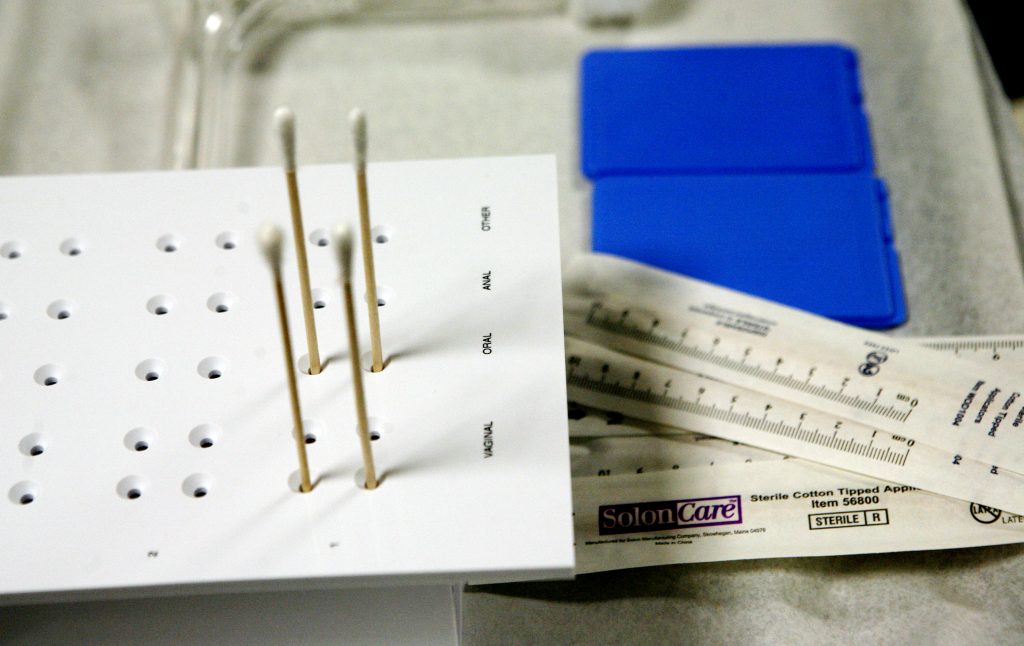
First, the examiner obtains a thorough medical history from the survivor. The survivor stands on a large sheet of paper while undressing in order to catch any hair or fiber evidence that may fall from her or his body. The survivor’s clothing and the sheet are collected for testing of hair, fibers, and any additional evidence. During the physical examination, any injuries from the attack are documented and treated, and evidence is collected. The examiner collects biological evidence such as saliva, blood, semen, urine, skin cells, and hair by taking swabs of the survivor’s skin, genitalia, anus, and mouth, scraping under the survivor’s fingernails and combing through the survivor’s hair. The survivor’s body is photographed head to toe to preserve evidence of bruising and injuries. It is important to note that any or all parts of this examination can be declined at any point. When the forensic medical examination is complete, the evidence collected is carefully packaged and labeled to prevent contamination.
The contents of the kit vary from state to state, but most kits include the following items:
- Detailed instructions for the examiner
- Forms for documenting the procedure and evidence gathered
- Tubes and containers for blood and urine samples
- Paper bags for collecting clothing and other physical evidence
- Swabs for biological evidence collection
- A large sheet of paper on which the victim undresses to collect hairs and fibers
- Dental floss and wooden sticks for fingernail scrapings
- Glass slides
- Sterile water and saline
- Envelopes, boxes, and labels for each of the various stages of the exam
While any doctor or nurse can perform the examination by following the instructions provided in the kit, some hospitals have specially trained personnel on staff called Sexual Assault Forensic Examiners (SAFEs) or Sexual Assault Nurse Examiners (SANEs) to perform the forensic medical examination. Research shows that programs with trained examiners significantly increase evidence collection and investigation in sexual assault cases, which results in significantly higher prosecution rates. Further, SANEs and SAFEs are trained to conduct exams that are sensitive, dignified, and reduce trauma.
For professional resources for SAFEs/SANEs, click here.