
Content Awareness:
This content explicitly mentions rape and may be difficult for some to read.
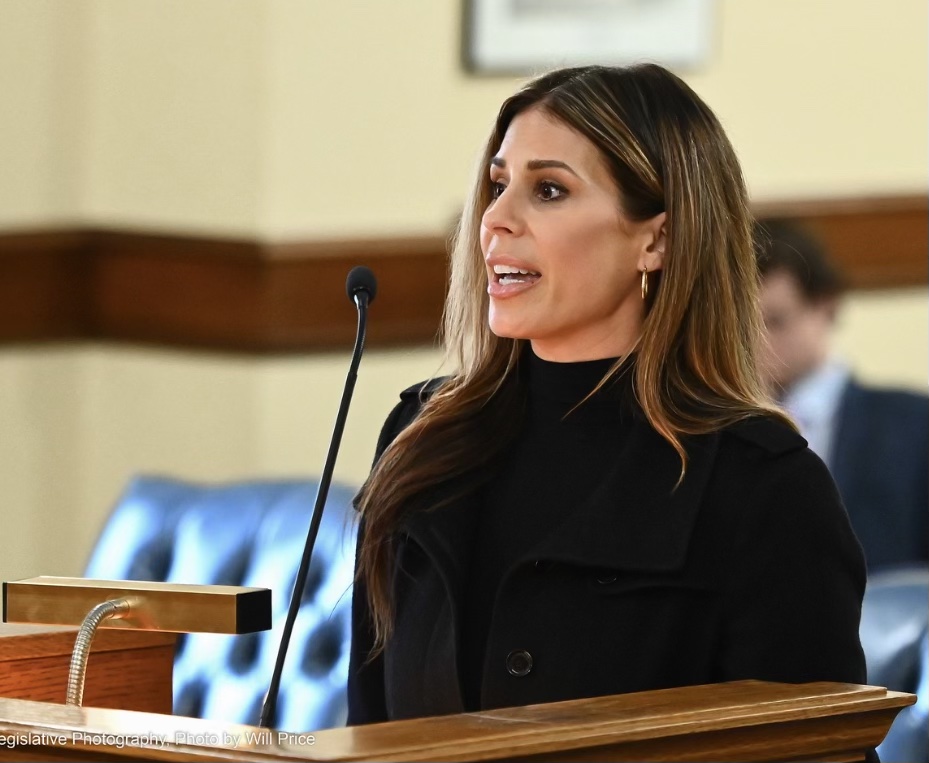
Ashley Spence is a victim advocate and founder of the DNA Justice Project. At 19 years old, she was the victim of a brutal home invasion rape that nearly took her life. The perpetrator was eventually caught through DNA testing. Ashley took this experience and turned it into the fuel that drives her passion to support legislation across the country that maximizes the use of DNA to prevent crimes, exonerate the innocent, and provide justice for survivors. In 2023, she successfully pushed legislation in Texas to collect DNA from all felony arrestees. She is working alongside Joyful Heart and other advocates in Massachusetts to close a procedural loophole that allows offenders to avoid giving their DNA to state officials, as is required by state law.
“Kevin Lee Francois, you are sentenced to nearly 138 years in prison.” As I stood in the back of the courtroom and heard these words, my head fell into my hands and I began to sob. I had waited 13 long years for justice, and now here it was. This man would never be able to harm another woman again, something that haunted me every night for over a decade. It was a moment I was deeply grateful for, and truthfully, one I never expected to have to endure.
At just 19 years old, my entire life was shattered in an instant. It was August of 2003, I was about to begin my sophomore year at Arizona State University. I went to bed that night as I always did, I felt like I was safe in my own home. Only this night, I wasn’t. In the middle of the night an intruder came into my apartment, smothered my face with a pillow and violently and repeatedly raped and beat me for hours. I was terrorized and nearly killed, but thankfully, I survived. Although I immediately called 911 and had a forensic examination done, there were no leads.
Sexual Assault Kit Process at Work
After seven long years, I received the shocking news that there was a DNA match in my case. The offender had been arrested in California and was charged with a felony crime. In California, people arrested for all felonies are required to submit their DNA for entry into the state database. Once entered into the database, Francois’s DNA matched my rape kit and he was arrested.
When they apprehended him, law enforcement found a shed behind his home full of women’s underwear from all over the world. It was clear that I wasn’t the first of his victims, and while seven years went by and he was free on the streets, I’m sure that I wasn’t the last. Like many rapists, Francois is a violent predator and a stalker who wouldn’t stop until he’s stopped.
I got justice in my case, but, sadly, it is a rare outcome. According to national statistics, out of 1,000 rapes, 97.5% of rapists go free. Only 3% will ever spend a day in jail. But we have the tools and power to change this statistic.
Why is Uncollected DNA a Problem?
In recent years, hundreds of thousands of previously untested rape kits have finally been analyzed, entered into CODIS, and are generating leads for law enforcement. While thousands of leads have been created, there should be more. Currently, anecdotal evidence from the field has shown that about one-quarter of kits entered into the database match to DNA profiles from offenders.
This low match rate is due to the hundreds of thousands of DNA samples that were supposed to be collected from certain offenders under federal and state laws and included in federal and state databases, but weren’t. DNA databases include two indexes: one for crime scene samples, including rape kits, and the other is for offender DNA profiles to match to crime scenes. Both sides of the database are crucial to solving crime. Right now, across the country, we know there are, between five states of varying sizes, 154,000 DNA samples that are “owed” from offenders, this means for a variety of reasons, an offender’s DNA was not collected while in prison or on probation. In fact, the United States Department of Justice estimates that there are between 40,000 and 50,000 uncollected offender samples in each state. To realize the return on investment in processing sexual assault kits, DNA from offenders who owe a sample under law must be collected and indexed.
The impact of this neglect is known: offenders – potentially tens of thousands per state – are escaping detection; sexual assaults, murders, and home invasion burglaries remain unsolved, and victims are still needlessly waiting for justice.
Making Change
There has been incredible and impressive work done by Joyful Heart Foundation’s End the Backlog initiative and their on the ground partners on rape kit reform and rape kit tracking which is giving paths to healing and justice to many that would not have otherwise had it, and it gives me tremendous hope! But, if we don’t have the other piece of the puzzle, the offender’s DNA component, then we simply aren’t going to get the matches and victims will be senselessly waiting for justice and closure.
My organization, DNA Justice Project, is working to change this. We are working with Joyful Heart Foundation and other advocates to find out how many owed DNA samples there are across the country, to get them collected, tested, and entered into DNA databases. Right now, we are thrilled to have a bill in Massachusetts sponsored by Representative Higgins to mandate an inventory of the uncollected offender DNA samples. In the last month inventory bills were enacted in Rhode Island, sponsored by Rep. Edwards and in Nevada, sponsored by Sen. Krasner. I expect more successes like these in the coming years.
I am fortunate. I have closure, justice, and a feeling of protection. This is something that every victim and their families deserve. They deserve to feel safe, to have justice, and find peace. Through the collection of lawfully owed DNA, we have the power to transform this massive injustice into hope, change, and healing for victims all over the country.